@nee's post on Artfol



I should really sleep since I have an exam tomorrow but instead I'll talk about plants here because I feel like it
As you may know, plants do photosynthesis. They use the sun's energy to produce their own energy and to use inorganic carbon molecules, such as carbon dioxide, to create organic carbon molecules, specifically glucose.
Glucose is the precursor to all the other molecules the plant will need to live, glucose is essential.
Photosynthesis is revolutionary, as being able to use an inorganic source of carbon is a huge advantage. We can't do that, and other animals can't either (except the nudibranche in my profile pic, I'll talk about it later), and this is why we depend on plants, since they can provide us those organic molecules.
But how did plants aquire this ability?
A very very long time ago, little bacterias were minding their own business when suddenly, (probably not so suddenly actually), they underwent an amazing transformation. Those bacterias had special structures and shape configurations that reacts with photons, thus releasing energy. Those bacterias were the first photosynthetic organisms. They are called cyanobacterias. Their ability was so amazing that non bacterial unicellulars (eukaryotes) decided to "eat" them. They didn't actually eat them, they just took them in and put them next to all their other cell components. The bacterias continued to do their thing, only part of the energy and glucose they produced was given to their host. Meanwhile, their host offered protection to the bacterias. This is known as the primary endosymbiosis.
Those eukaryotic cells were now photosynthetic too, and some of them became plants. By that time, the bacterias weren't really bacterias anymore, they had become an entire part of the cell, called the chloroplast.
This is the same process that led to eukaryotic organisms (including animals), to have mitochondrias btw, that you may know under the name of "the powerhouse of the cell" ! Except it was breathing bacterias and not photosynthesic ones
Now lets go back to this nudibranches I mentioned.
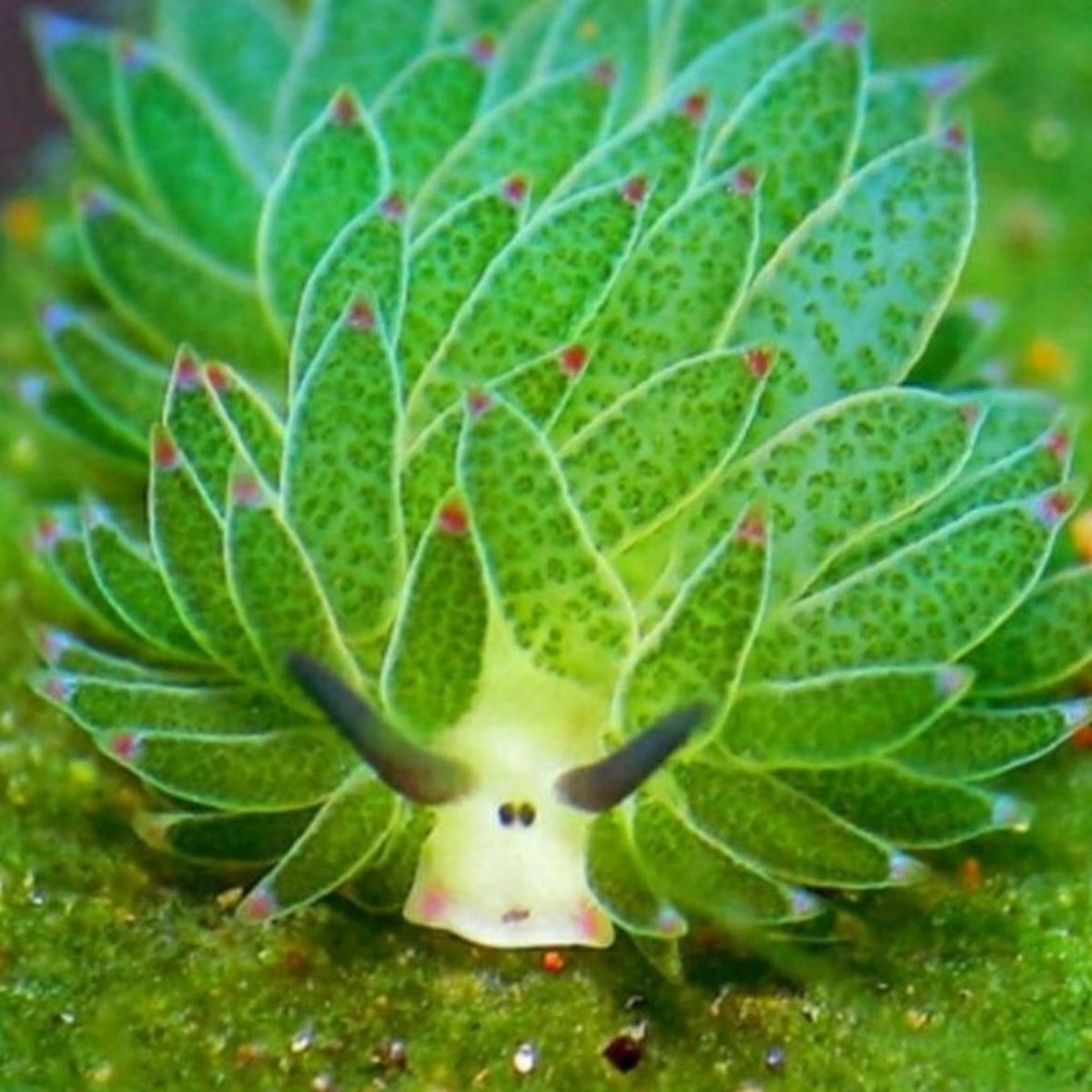
Nudibranches are sea slugs, very colorful tiny creatures. I think they are very cool, and the one of my pfp is capable of doing photosynthesis too! I'm not sure how many spieces can do that, I'm aware of only two of them though.
How?
They copied the plants, more or less. Basically, they eat algae that contains chloroplasts, and keep them for themselves. It's not to be pretty that they do that, it's to use them. The chloroplasts now work for them and provide them with energy and glucose. No need to eat anymore, sun is all that is needed.
I often wonder if this will lead to the first actual photosynthetic animal, who knows, maybe someday the chloroplasts will be completely integrated by the slugs and they will be born with it?
Until then, have a nice evening and thank you for reading until three
And sorry for the potential typos, I'm very tired Mar 5, 2025
As you may know, plants do photosynthesis. They use the sun's energy to produce their own energy and to use inorganic carbon molecules, such as carbon dioxide, to create organic carbon molecules, specifically glucose.
Glucose is the precursor to all the other molecules the plant will need to live, glucose is essential.
Photosynthesis is revolutionary, as being able to use an inorganic source of carbon is a huge advantage. We can't do that, and other animals can't either (except the nudibranche in my profile pic, I'll talk about it later), and this is why we depend on plants, since they can provide us those organic molecules.
But how did plants aquire this ability?
A very very long time ago, little bacterias were minding their own business when suddenly, (probably not so suddenly actually), they underwent an amazing transformation. Those bacterias had special structures and shape configurations that reacts with photons, thus releasing energy. Those bacterias were the first photosynthetic organisms. They are called cyanobacterias. Their ability was so amazing that non bacterial unicellulars (eukaryotes) decided to "eat" them. They didn't actually eat them, they just took them in and put them next to all their other cell components. The bacterias continued to do their thing, only part of the energy and glucose they produced was given to their host. Meanwhile, their host offered protection to the bacterias. This is known as the primary endosymbiosis.
Those eukaryotic cells were now photosynthetic too, and some of them became plants. By that time, the bacterias weren't really bacterias anymore, they had become an entire part of the cell, called the chloroplast.
This is the same process that led to eukaryotic organisms (including animals), to have mitochondrias btw, that you may know under the name of "the powerhouse of the cell" ! Except it was breathing bacterias and not photosynthesic ones
Now lets go back to this nudibranches I mentioned.
Nudibranches are sea slugs, very colorful tiny creatures. I think they are very cool, and the one of my pfp is capable of doing photosynthesis too! I'm not sure how many spieces can do that, I'm aware of only two of them though.
How?
They copied the plants, more or less. Basically, they eat algae that contains chloroplasts, and keep them for themselves. It's not to be pretty that they do that, it's to use them. The chloroplasts now work for them and provide them with energy and glucose. No need to eat anymore, sun is all that is needed.
I often wonder if this will lead to the first actual photosynthetic animal, who knows, maybe someday the chloroplasts will be completely integrated by the slugs and they will be born with it?
Until then, have a nice evening and thank you for reading until three
And sorry for the potential typos, I'm very tired
Mar 5, 2025Comments