@aspiringhaystack's post on Artfol




 Question of the Day
 How do you improve quickly at art?
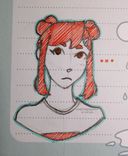
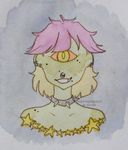
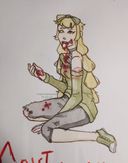
I've been at roughly the same art level as 2 years ago (or at least I think so) and barely seem to improve while I've noticed other artists improve insane amounts over a few months or a year.
Some of them were younger artists who are still in school or have more time to draw of course but still-
Idk, I don't mean for this post to be about me complaining, sorry if it seems that way, I genuinely would like advice if anyone is willing to give some
 Oct 23, 2022
#question
#artlevel
Comments
Btw thank you all for the tips and advice! I haven't responded to everyone but I appreciate everyone's comments.

•
The simple answer is to have a sketchbook. Everyday inside that sketchbook for atleast 30 minutes practice something you are unfamiliar with or just plainly suck at. Allow yourself to make mistakes in this sketchbook. Before you start remember that inside of this sketchbook your goal is to improve not to make a pretty picture. Fill it with as many otherworldly hands, and disfigured faces as you can. Every time after you draw something judge it based on what you did wrong and if you can't ask someone else to. Preferably someone that's not a family member. In a month you will see a drastic change in your art if you do so and don't forget to use references and copy whatever and whoever you want since it's not gonna see the light of day. It's a bit boring but it's what must be done.

•
Finding something I’m really excited about to connect with art stuff really helped me + taking my scetchbook everywhere with me.
But the most important I think was to get more confident in my stuff by getting some composition basics down. Helps a lot with making scetchbook and practice pages to look good ^w^
That way even if the scetches are rough and out of proportion they don’t hit as hard and at least my motivation keeps up better ^-^"
That also connects to the "stuff I get excited about" too since the whole color theory, shape language and composition stuff got really fun for me. We had those in school for art analysis (basically making assumptions about already existing art … we were all not sold on the "yeah definitely intentional and with such deep meaning" thing) but including some just for fun in some of my art got me hooked and eventually I got to now and using a good chunk of that stuff ^u^

But the most important I think was to get more confident in my stuff by getting some composition basics down. Helps a lot with making scetchbook and practice pages to look good ^w^
That way even if the scetches are rough and out of proportion they don’t hit as hard and at least my motivation keeps up better ^-^"
That also connects to the "stuff I get excited about" too since the whole color theory, shape language and composition stuff got really fun for me. We had those in school for art analysis (basically making assumptions about already existing art … we were all not sold on the "yeah definitely intentional and with such deep meaning" thing) but including some just for fun in some of my art got me hooked and eventually I got to now and using a good chunk of that stuff ^u^
•


You try something new. And use that time wisely. Like an hour or two every couple days a week

•
More and more practice! Theres no quick way to improvement, but here my tips, try to do new stuff! Draw something that is out of your comfort zone, try to experiment with other things, the result might not be great but youve done it! Don't avoid something youre bad at, do more of it! Study it, draw it over and over, without you even notice it improvement will come by it self! Good luck!

•
•The answer is 100% to do more studies. Now these can vary from 10 min sketches to 5 hour observationals.
Ideally starting by practicing line and structure (look up drawabox.com !) then moving on to the fundamentals of still life observational art (the one with the vases and stuff), and then moving on to more specific things like anatomy studies/etc work the best. These would need lots of hours and dedication but work like a charm
However, not everyone has this time, in that case, even 30mins- 1 hr of doing things like gesture drawings, sketches go a long way

Ideally starting by practicing line and structure (look up drawabox.com !) then moving on to the fundamentals of still life observational art (the one with the vases and stuff), and then moving on to more specific things like anatomy studies/etc work the best. These would need lots of hours and dedication but work like a charm
However, not everyone has this time, in that case, even 30mins- 1 hr of doing things like gesture drawings, sketches go a long way
•
•While there are no shortcuts to improve quickly, I can at least tell you what helped me.
Drawing is more in your head than it is in your hand, so in order to improve you have to teach your eyes and brain to see things the right way. So there's a lot you can do here, from learing to shade simple shapes, drawing objects from life, learning anatomy. I see you draw a lot of characters, so I would really recommend checking if there are any life drawing classes in your area.
It's also worth checking out some simple painting tutorials even if you don't have interest in becoming a painter, because painting forces you to drop lines and see things as abstract shapes. Basically everything that gives you a new perspective of seeing things is gonna be to your advantage.
I know a lot of this may sound boring, but I always think about it as a long term investment in my skills There are a lot of tutorials on youtube that explain it better than me, it's worth looking into because it's not enough to just practice, you also have to know what and how to practice. And lastly remember that it's not enough to do those exercises once, but if you do them consistently you will start seeing improvement. Hope that helps

Drawing is more in your head than it is in your hand, so in order to improve you have to teach your eyes and brain to see things the right way. So there's a lot you can do here, from learing to shade simple shapes, drawing objects from life, learning anatomy. I see you draw a lot of characters, so I would really recommend checking if there are any life drawing classes in your area.
It's also worth checking out some simple painting tutorials even if you don't have interest in becoming a painter, because painting forces you to drop lines and see things as abstract shapes. Basically everything that gives you a new perspective of seeing things is gonna be to your advantage.
I know a lot of this may sound boring, but I always think about it as a long term investment in my skills
There are a lot of tutorials on youtube that explain it better than me, it's worth looking into because it's not enough to just practice, you also have to know what and how to practice. And lastly remember that it's not enough to do those exercises once, but if you do them consistently you will start seeing improvement. Hope that helps•
•I'd say to do a lot of studies and go out of your comfort zone! Also identifying your weaknesses is great to know what to work on.
I'm going to critique your art now because I assume I can since you asked for advice (sorry if you didn't want that): for your case, I'd say to study anatomy. You don't have to learn every single muscle of course, but overall try to focus on that by doing figure drawing for example. I also noticed a bit of a same face syndrome, so I'd say to practice drawing faces in general and try implement different features for your OCs. It's hard, I know, I'm also guilty of this and I'm constantly battling the same face syndrome too.
If you don't know him already I highly recommend watching Marc Brunet on YouTube, this guy's channel is a gold mine. He's more on the digital art side however, but there's many of his tutorials that can be used for traditional drawing as well

I'm going to critique your art now because I assume I can since you asked for advice (sorry if you didn't want that): for your case, I'd say to study anatomy. You don't have to learn every single muscle of course, but overall try to focus on that by doing figure drawing for example. I also noticed a bit of a same face syndrome, so I'd say to practice drawing faces in general and try implement different features for your OCs. It's hard, I know, I'm also guilty of this and I'm constantly battling the same face syndrome too.
If you don't know him already I highly recommend watching Marc Brunet on YouTube, this guy's channel is a gold mine. He's more on the digital art side however, but there's many of his tutorials that can be used for traditional drawing as well
•
Practice a lot. It doesn’t need to take hours, but spend some time with it as often as you can :3 Even a 10 mins long daily gesture drawing session helps a ton. Consistency is the key - also practicing smart.

•
•Practice a hella lot is the only way, and try a variety of different things like diff ways of shading, etc

•