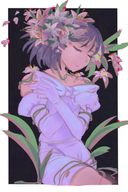
@zepp's post on Artfol




About color studies?? ?
How do you study color¿ Like i see you can take a photo and replicate it in a simpler way to practice colors, but what am I supposed to be taking notes of?
Like how with gesture drawing you quickly sketch gestures and observe how the body moves. So what am i supposed to be observing during color studies?May 5, 2021
How do you study color¿ Like i see you can take a photo and replicate it in a simpler way to practice colors, but what am I supposed to be taking notes of?
Like how with gesture drawing you quickly sketch gestures and observe how the body moves. So what am i supposed to be observing during color studies?May 5, 2021
#colors
#help
#question
Comments
I don't. I can't see and I like to exaggerate. I think the best source is viewing classical art

•
•Here’s a video about colors and oil paints that discusses pretty heavily on color theory. My professor recommended that we watch it for our complimentary studies:
https://www.youtube.com/watch?v=10O6Ls2QqM0

https://www.youtube.com/watch?v=10O6Ls2QqM0
•
•i like to study other artists, especially for lighting. I look at how the colors change in terms of hue and value in shadow and light and i look at how other colors that aren't as dominant are implemented to make the piece more interesting. For example, samdoesart and many other artists implement a color that is a different temperature (usually cool, especially when painting skin) as ambient light, which makes the painting more interesting. Other artists can be your best tool when learning

•
•Another examole is how you use a range of values
No matter what your values are, the brightest value in your pallette will be percieved as "white" and the darkest value will be percieved as "black", even if your brightest value is actually grey and your darkest value is actually brown, and you can use this illusion to your advantage when applying it to your composition

No matter what your values are, the brightest value in your pallette will be percieved as "white" and the darkest value will be percieved as "black", even if your brightest value is actually grey and your darkest value is actually brown, and you can use this illusion to your advantage when applying it to your composition
•
•Watch how color depends on lighting and objects around; for example, if you go for walk, notice, what's color of shades when it's sunny or gray, or how white walls can change their color because of reflections of surrounding things like green trees or else, explore and observe; also you can find a color circle(idk how it's called) and try to make art using contrary colors from circle's sides, it may help with understanding of color combinations
If you wanna go deeper, read some books like Color and Light by James Garni;
Good luck

If you wanna go deeper, read some books like Color and Light by James Garni;
Good luck
•
•Color studies are mostly to learn how colors interact with each other visually
So take mental notes of how color combinations feel to you, and how they play off each other
For example if you have a mostly warm pallette in your composition and you introduce grey, then the grey will actually look more blue...
It teaches you how to use colors that give an illusion of the color you really want without using the true color
So take mental notes of how color combinations feel to you, and how they play off each other
For example if you have a mostly warm pallette in your composition and you introduce grey, then the grey will actually look more blue...
It teaches you how to use colors that give an illusion of the color you really want without using the true color
•
•