


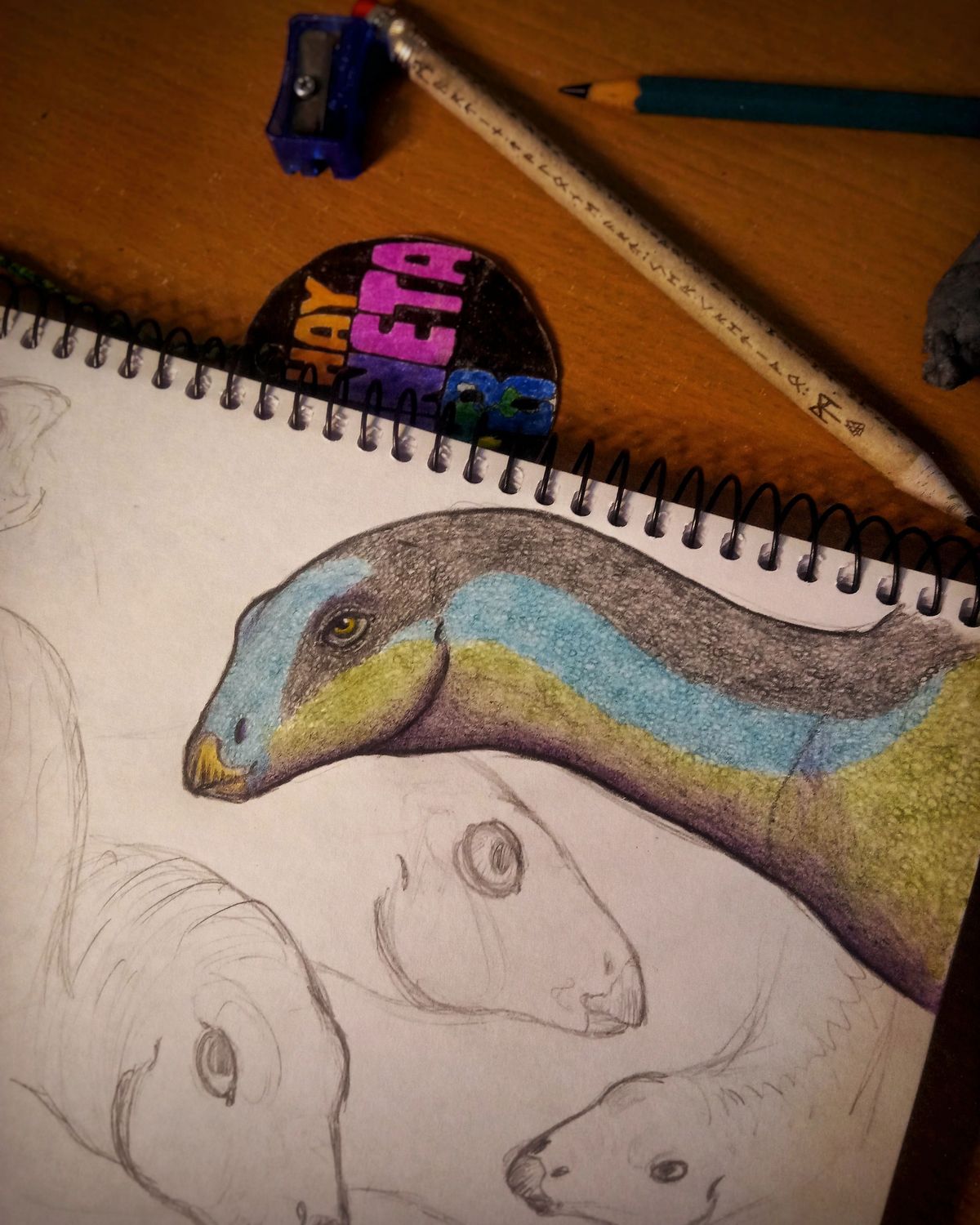
Talenkauen sketch + Etymology
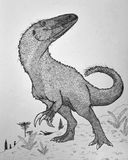
Desde que leí por primera vez el significado de un nombre científico en un libro sobre dinosaurios (Stegosaurus= "lagarto con techo") he desarrollado cierta fascinación por la Etimología, que es la disciplina lingüística que estudia el significado, origen y evolución de las palabras. Desde que el naturalista sueco Carlos Linneo acuñó el sistema de nomenclatura binominal en el siglo XVIII, los nombres científicos de todos los seres vivos están compuestos por dos partes: un epíteto genérico y un epíteto específico, que denotan el género y la especie a la que pertenece un organismo (o el "nombre y apellido"). Así es como he ido aprendiendo, lenta y casi involuntariamente, a lo largo de los años, un poco de griego y de latín. Me encanta, cada vez que conozco un nombre nuevo, desglosarlo y tratar de discernir su significado. Pero hay veces que no es tan sencillo, ya que otros idiomas empiezan a ser incorporados al proceso. Talenkauen santacrucensis, por ejemplo, es un dinosaurio ornitópodo del Cretácico de Santa Cruz, Argentina, parecido a Anabisetia y Morrosaurus, pero con un cuello bastante más largo. Eso ha llevado a los paleontólogos a nombrarlo "cabeza pequeña". Pero en lugar de usar la terminología habitual y llamarlo "Microcephalus" o algo semejante, eligieron utilizar un vocablo en idioma Chon, la lengua hablada por los pueblos tehuelches y selk'nam de la Patagonia. Ejemplos como ese entre la fauna fósil argentina hay unos cuantos (en China también se está volviendo costumbre), y algunos de esos nombres me parecen simplemente magníficos.¿Cuál es tu nombre científico favorito?
¡Saludos, y #SeanCreativos!




Since I first read the meaning of a scientific name in a book about dinosaurs (Stegosaurus = "lizard with a roof") I have developed a certain fascination for Etymology, which is the linguistic discipline that studies the meaning, origin and evolution of words. . Since the Swedish naturalist Carl Linnaeus coined the binominal nomenclature system in the 18th century, the scientific names of all living things have been made up of two parts: a generic epithet and a specific epithet, denoting the genus and species to which an organism belongs (or the "first and last name"). This is how I have been learning, slowly and almost involuntarily, over the years, a little bit of Greek and Latin. I love, every time I meet a new name, breaking it down and trying to find out its meaning. But there are times that's not such a simple task, since other languages begin to be incorporated into the process. Talenkauen santacrucensis, for example, is an ornithopod dinosaur from the Cretaceous of Santa Cruz, Argentina, similar to Anabisetia and Morrosaurus, but with a much longer neck. That has led paleontologists to name it "little head." But instead of using the usual terminology and calling it "Microcephalus" or something similar, they chose to use a word in the Chon language, the language spoken by the Tehuelche and Selk'nam peoples of Patagonia. There are several examples like that among the Argentine fossil fauna (in China it is also becoming customary), and some of those names seem simply magnificent to me.
What is your favorite scientific name?
Greetings, and #BeCreative!
 https://smart.bio/martintaloneAug 17, 2021
#colorpencils
#dinosaur
#paleoart
#prehistoric
#animals
Comments
No comments yet